Operationalizing responsible AI processing of brain data: IBI Workshop in Raitenhaslach
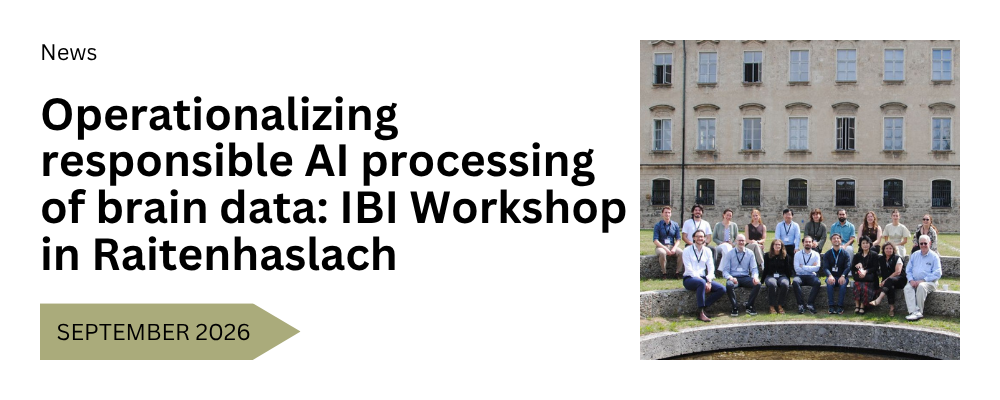
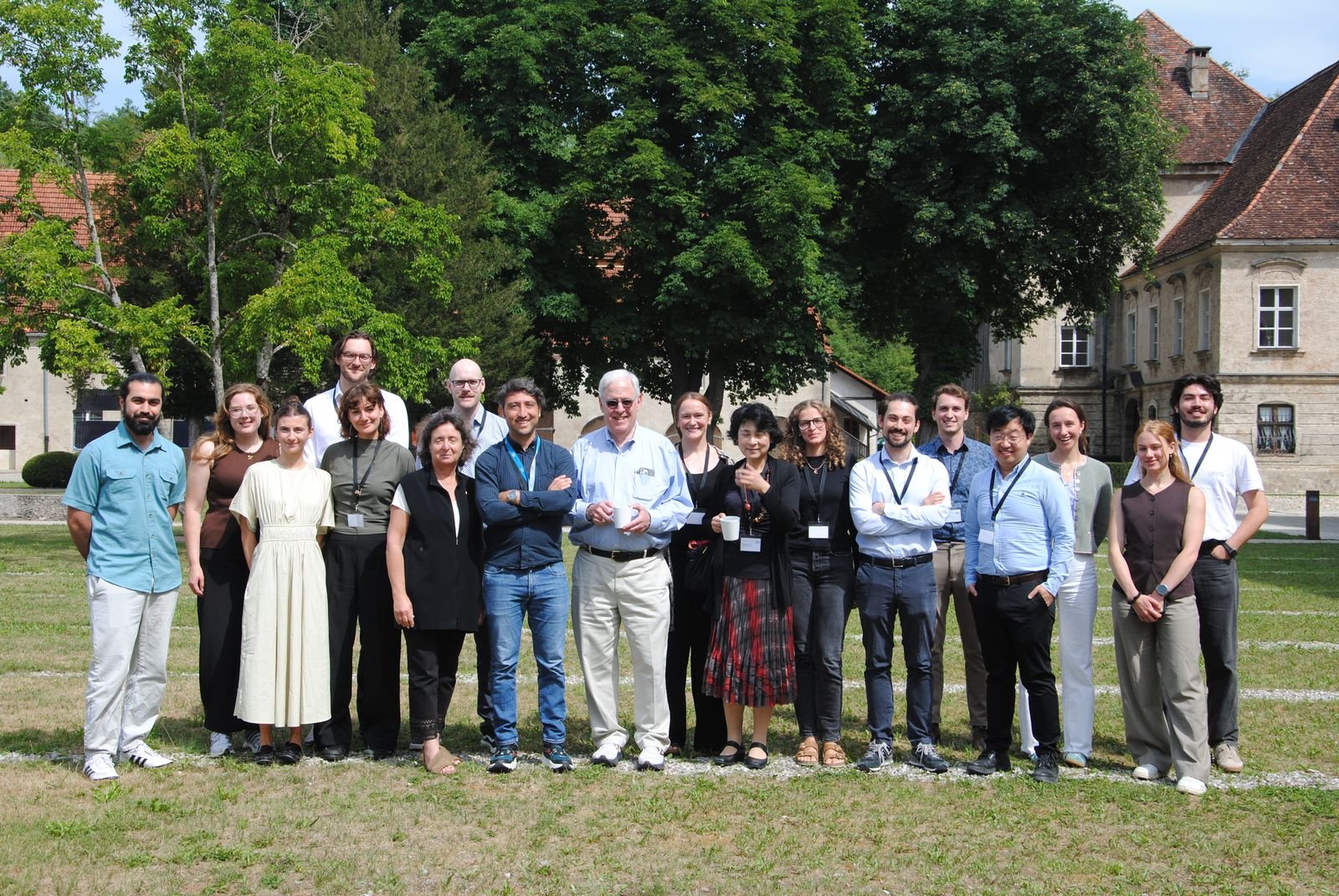
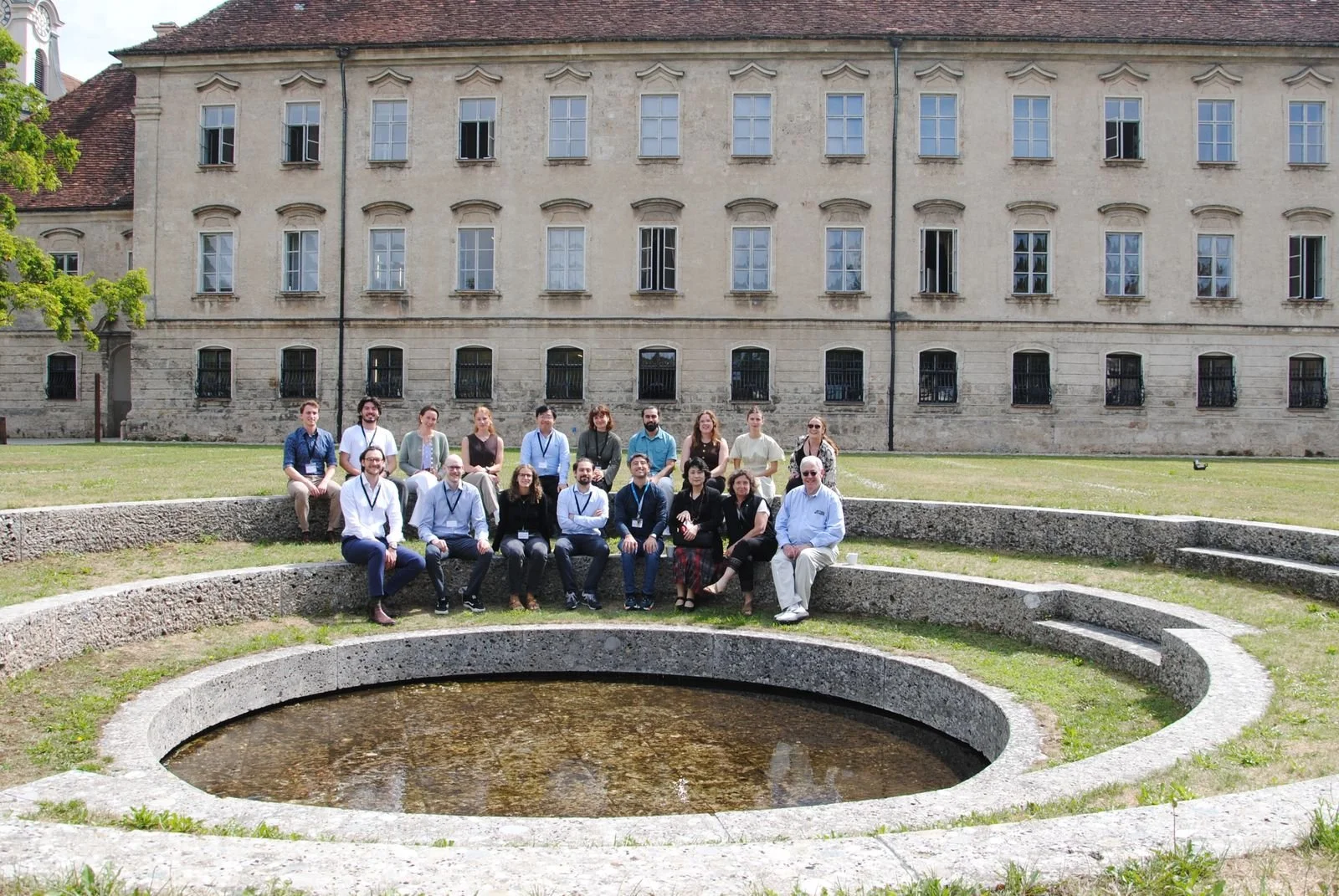
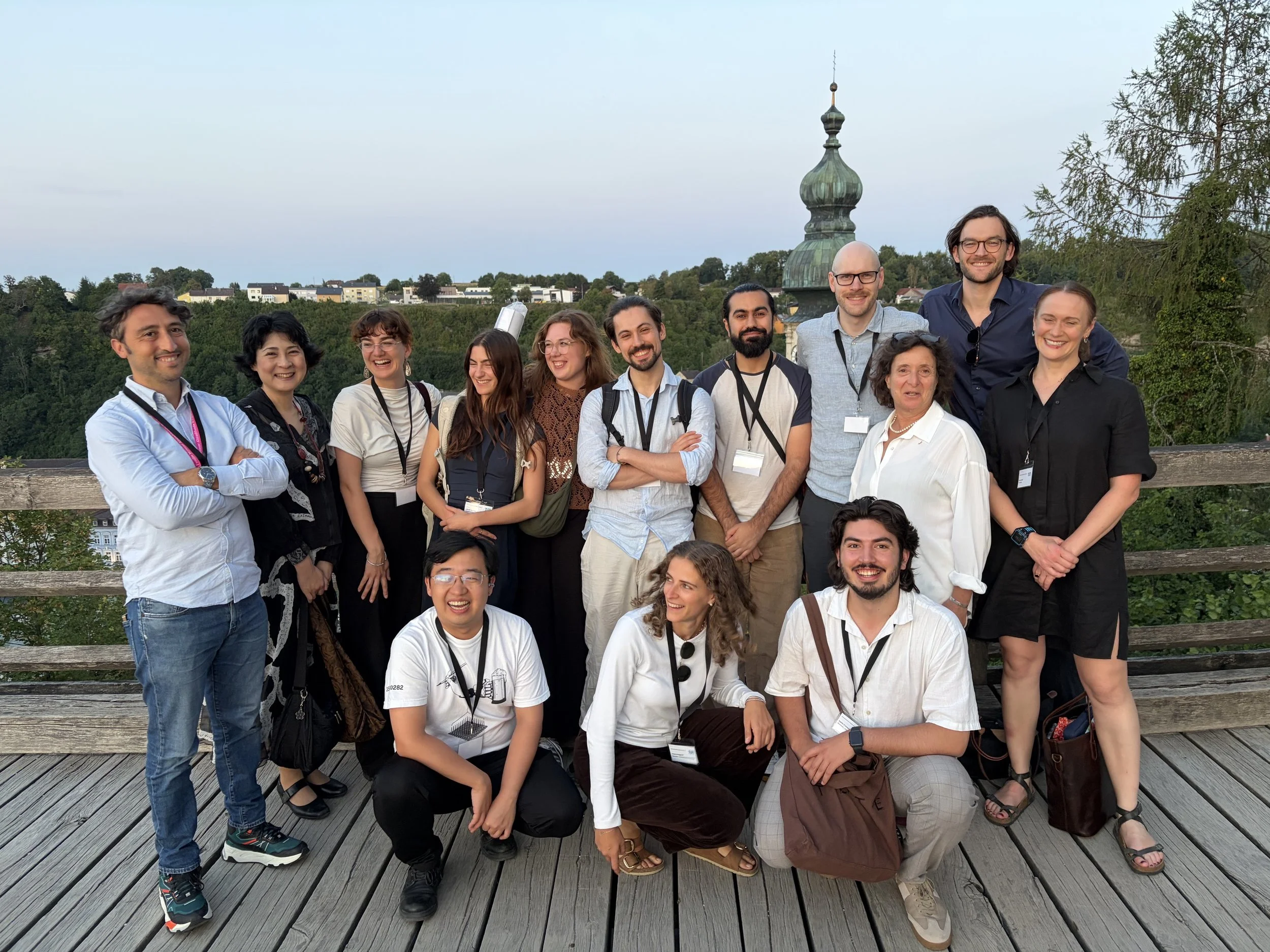
From July 20 - 22, 2026, members of the International Brain Initiative (IBI), together with experts from neuroscience, artificial intelligence, neuroethics, law, data governance, and related fields, gathered in Bavaria, Germany, for the workshop “Operationalizing Responsible AI Processing of Brain Data.” The meeting was hosted by the Technical University of Munich (TUM) at the historic TUM Academy Center Raitenhaslach and organized in collaboration with the IBI Neuroethics Working Group and the TransforM Cluster of Excellence.
The workshop marked an important next step in the IBI Neuroethics Working Group’s work on responsible brain data governance. Building on the Working Group’s recently developed Brain Data Governance Framework, the meeting shifted the focus from identifying ethical and governance principles to determining how these principles can be translated into concrete and implementable practices across research, clinical care, technological development, and policy.
Discussions focused particularly on the rapidly growing role of artificial intelligence in processing neural and brain-related data. Advances in machine learning are making it increasingly possible to infer information about cognition, health, behaviour, and potentially mental states from complex neural datasets. At the same time, AI is becoming integral to emerging technologies such as brain-computer interfaces, speech neuroprostheses, adaptive and closed-loop systems, and other forms of neurotechnology. These developments create substantial opportunities for science and medicine but also raise new questions concerning privacy, autonomy, data protection, explainability, accountability, standardization, and responsible innovation.
The workshop therefore asked a practical question: What would responsible brain data governance look like when translated into the everyday decisions of researchers, clinicians, technology developers, companies, ethics committees, regulators, and other stakeholders?
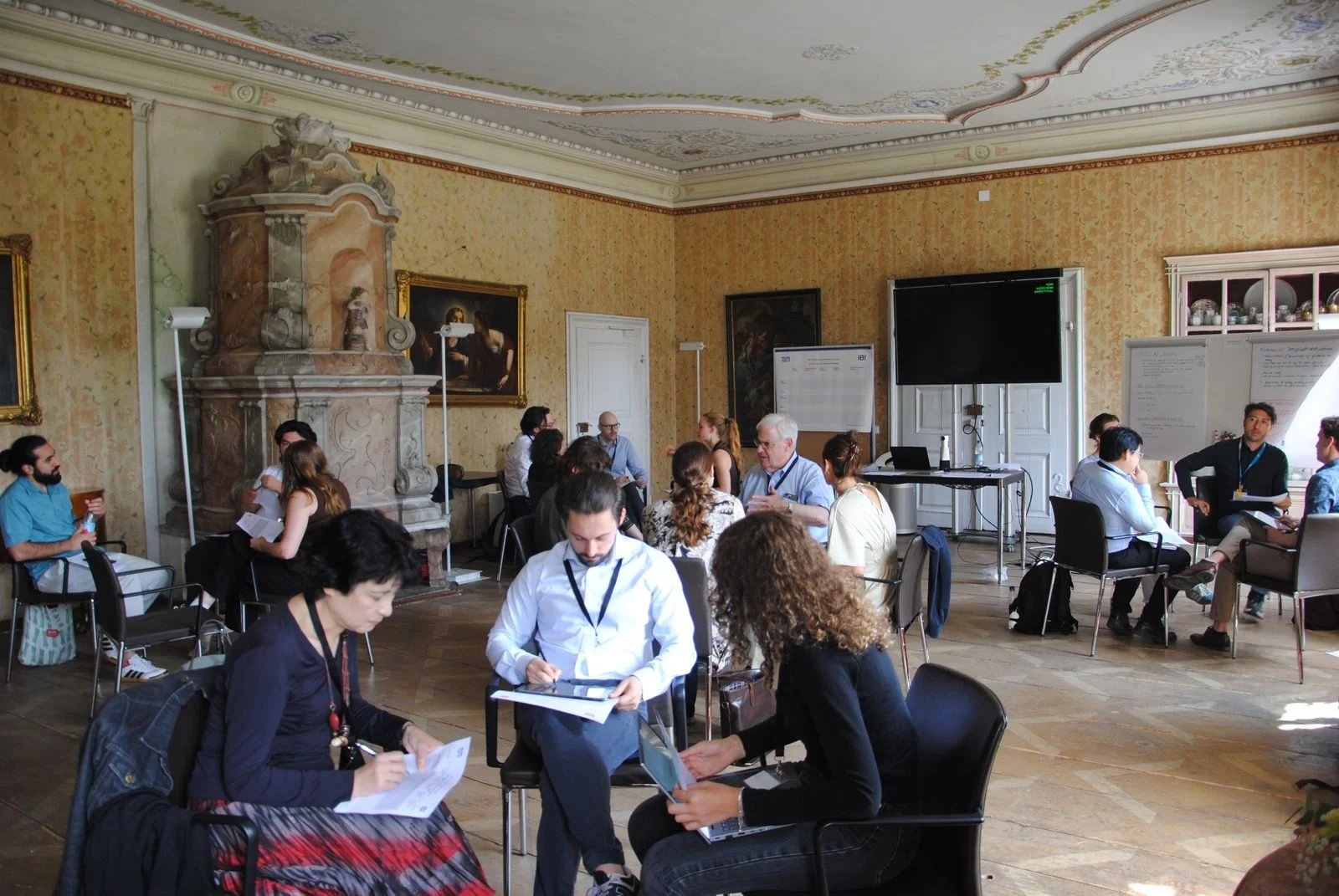
Using a modified Delphi methodology, participants worked in an iterative and highly interactive format to identify governance gaps, compare perspectives across disciplines, and formulate actionable recommendations. Discussions addressed areas including ethics-by-design, AI and neural data processing, data protection and regulation, standardization, clinical translation, industry responsibility, and mechanisms for implementation and oversight. Particular attention was given to ensuring that governance approaches remain responsive to different technological contexts and to the diverse stakeholders affected by the collection, interpretation, sharing, and commercialization of brain data.
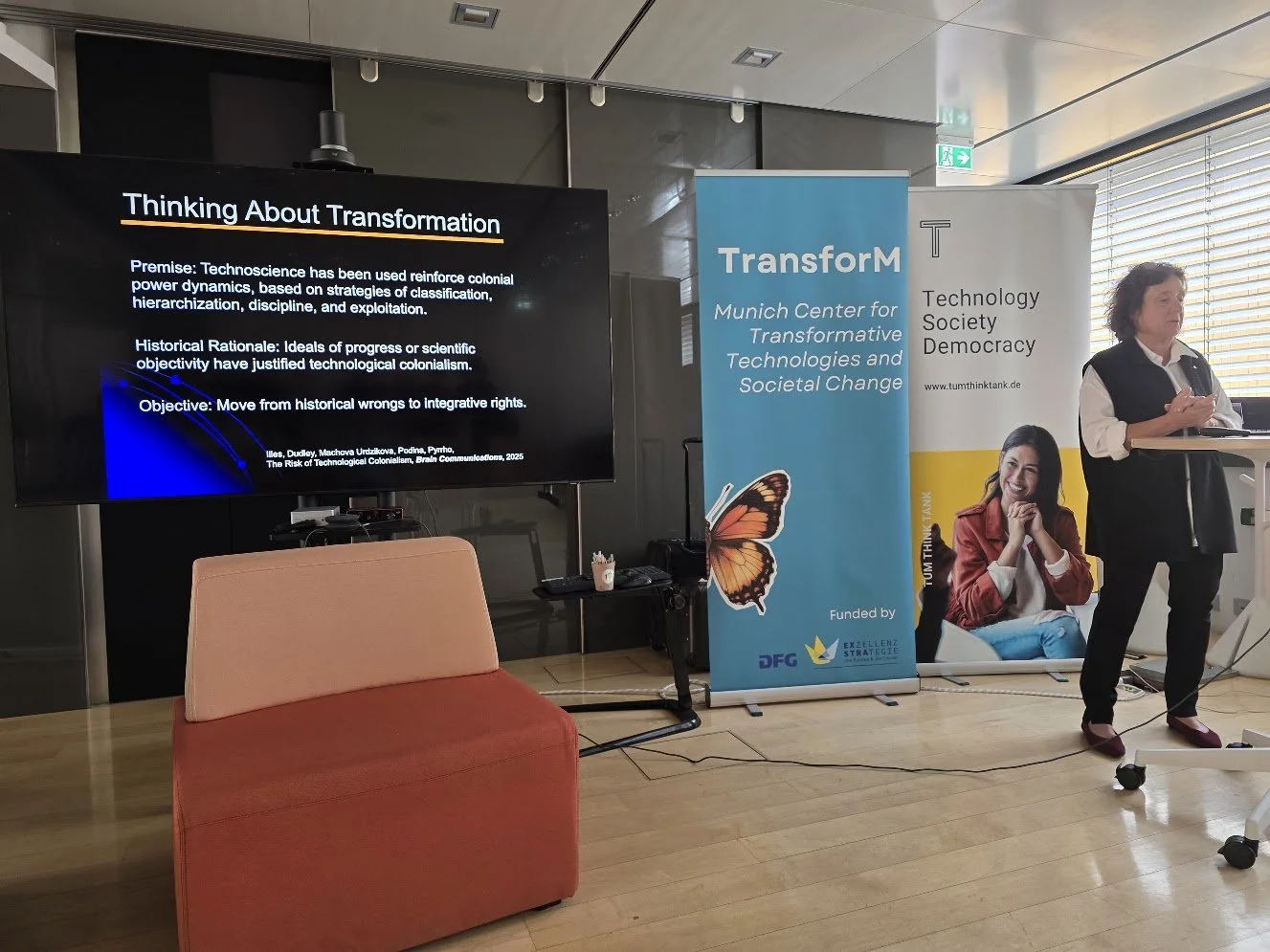
The workshop was preceded on July 20th by a special event at the TUM Think Tank, organized under the TransforM Lecture Series. IBI Neuroethics Working Group Co-Lead, Professor Joseph J. Fins, presented Being Conscious of Technology, drawing on his longstanding research on neuroimaging, covert consciousness, and deep brain stimulation in patients with disorders of consciousness. Professor Judy Illes, Co-Lead of the IBI Crosscultural Working Group and IBI Immediate Past Chair, presented Cultural Transformations in Medicine and Neurotechnology. Her lecture explored how neuroscience and neurotechnology can move beyond historical patterns of technological colonialism and toward culturally responsive approaches grounded in community participation, data sovereignty, and diverse systems of knowledge.
These perspectives also underscored a broader theme running through the workshop: responsible governance cannot be achieved through technical safeguards alone. The development and use of AI and neurotechnologies must remain attentive to the social, cultural, clinical, and institutional environments in which technologies are embedded, as well as to the rights and expectations of the individuals and communities whose data make these advances possible.
The Raitenhaslach meeting brought together in-person participants with members of the wider IBI community joining remotely from different regions of the world. Dedicated hybrid sessions enabled members of the IBI Neuroethics Working Group who could not travel to Germany to contribute to the discussions, helping maintain the international perspective that has characterized the Working Group’s activities.
NEXT STEPS
The workshop was deliberately conceived not as the endpoint of this process, but as the first drafting phase of an Operational Brain Data Governance Toolkit. Drawing on the recommendations and areas of consensus identified in Raitenhaslach, the TUM team is now consolidating the workshop outputs into a first structured draft.
The draft will be circulated to members of the IBI Neuroethics Working Group in September 2026 for further review. A dedicated virtual consultation will then bring together the broader international Working Group to critically assess and refine the recommendations, identify remaining gaps, and ensure that the toolkit reflects different disciplinary, geographical, regulatory, and cultural perspectives.
The longer-term ambition is to develop an implementation-oriented resource that complements the IBI Brain Data Governance Framework, helping translate high-level principles for responsible brain data governance into practical guidance that can inform neuroscience research, clinical practice, technology development, institutional governance, and public policy.
In this way, the Raitenhaslach workshop represents a further step in the IBI’s efforts to ensure that governance evolves alongside advances in AI and neuroscience—and that the extraordinary scientific and clinical potential of brain data can be realized in ways that remain ethically responsible, socially responsive, and internationally inclusive.